LTE-Working to sustain services that support LANL and our community
Published on October 24, 2025
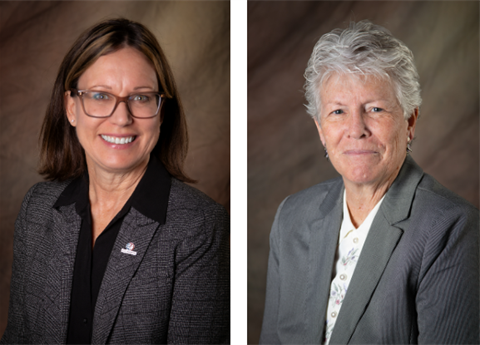
By Theresa Cull, Chair of the Los Alamos County Council and Anne Laurent, Los Alamos County Manager
Shared Responsibility and Partnership
In response to Director Thom Mason’s October 23, 2025, letter, “Raising Gross Receipts Tax Could Hinder LANL’s Growth and the Region’s Prosperity,” we want to reaffirm our strong partnership with Los Alamos National Laboratory (LANL) and our shared responsibility to sustain a thriving community that supports the Laboratory’s mission and workforce.
Until 2006, when LANL was operated by the University of California as a nonprofit, the Laboratory did not pay gross receipts tax (GRT). As a result, County infrastructure, including roads, facilities, and public services, struggled to keep pace with the needs of a world-class scientific institution. Over the past two decades, the County has worked to modernize these systems and keep pace with LANL’s growth. Laboratory management has consistently praised these efforts, which help make the community an attractive place for recruitment and retention of highly skilled staff. Because LANL is the region’s largest employer, bringing approximately 10,000 commuters into the community each workday and placing additional demand on local infrastructure and services, it is appropriate that the Laboratory contributes to current and future expenses related to housing, broadband, emergency response, traffic safety, and public safety, which directly support its mission.
Fiscal Context and the Proposed Change
For more than three years, since we were notified that LANL intended to take advantage of New Mexico’s manufacturing tax exemption, we have been in ongoing discussions with LANL and the Department of Energy about how to maintain the services that the Laboratory depends on. The possibility of a GRT rate adjustment has always been part of that conversation.
Today, Los Alamos County’s current GRT rate is 7.062 percent, the second lowest in New Mexico. Of that amount, just over two percent remains with the County to fund essential local services and operations. The State of New Mexico receives 4.875 percent, which supports education, roads, and statewide and regional services, and 0.125 percent supports the Regional Transit District. The County is proposing to increase the total rate to 7.6875 percent, a change of slightly more than half of one percent, to sustain vital programs and maintain fiscal stability.
Why This Adjustment Matters
Without this adjustment, projections show that the County could face deficits of $16–$20 million beginning in Fiscal Year 2027. The result would be delayed or canceled infrastructure projects, reductions to regional and community funding, and impacts to essential services such as public safety, traffic safety, housing, economic development, contracts with local nonprofits, healthcare assistance, and facility maintenance, all of which are funded through GRT revenues.
This shortfall is not the result of inefficiency. It stems from a structural decline in gross receipts, primarily from LANL following its decision to take advantage of New Mexico’s manufacturing exemption, along with rising costs driven by inflation. While LANL has indicated that its budget is leveling out, the County continues to meet the Laboratory’s high expectations for essential community services that support daily life in our community. Those expectations remain unchanged even after LANL’s hiring surge over the past six years, which brought thousands of new employees, commuters, and families to the region and significantly increased demand for housing and local services. Although the County’s revenues have declined, the expectation to maintain a world-class level of support for a world-class institution has not.
Commitment to Fiscal Stewardship and Collaboration
Every year, the County identifies cost savings and efficiencies through its budget process and public hearings to carefully forecast the long-term impact of every fiscal decision. We take seriously our responsibility to manage public resources transparently and prudently. Los Alamos County is consistently recognized for excellence in financial management, governance, and fiscal stewardship. Our strong bond rating allows us to borrow at lower interest rates, saving taxpayers money and enabling the County to deliver major projects that benefit the entire community.
Our partnership with LANL extends well beyond daily operations. Through coordinated planning and shared initiatives, we work together to manage power costs, advance clean energy, and strengthen community resilience. The County also invests locally in education through ongoing support for Los Alamos Public Schools and UNM-LA, while regional partnerships focus on infrastructure and economic development that benefit neighboring communities and the broader Northern New Mexico economy. These efforts sustain LANL’s workforce and strengthen the region’s long-term prosperity.
Looking Ahead
With the proposed increase, Los Alamos County’s GRT rate would remain below Taos (over 9 percent) and below Santa Fe and Española (above 8 percent), keeping our community competitive for residents and businesses. LANL would continue to benefit from one of the lowest tax rates in the region, even if the GRT increase is approved.
While we recognize that there is never a perfect time to raise taxes, especially during a federal shutdown, approving the increase now allows it to take effect on July 1, 2026. Any delay would add cost and could postpone scheduled bond sales needed to advance key projects, including the community broadband network.
We remain committed to being good partners, careful stewards, and responsive leaders. Adopting this modest GRT increase at the public hearing, which is part of the regular County Council meeting on October 28, is a responsible step that protects essential services, supports LANL’s workforce, and ensures Los Alamos continues to provide the infrastructure, housing, and quality of life that benefit the Laboratory, our residents, and the region we share. The meeting will be held at 6 p.m. in Council Chambers, 1000 Central Avenue, with a Zoom option available for those who wish to participate remotely. Public comment is always welcome.